|
|||||||||||||
 |
|||||||||||||
Recent Developments in Electronics
|
|||||||||||||
The "Recent Developments in Electronics" column in a 1968 issue of Electronics World magazine featured among other topics, a six-foot McDonnell-Douglas DC-10 jet model tested inside a charged wire enclosure generating controlled electromagnetic fields to evaluate communications and navigation antennas across flight attitudes on the 179-foot tri-jet for 330 passengers -- which led to modern anechoic chambers for 5G and aircraft testing. ITT Industrial Laboratories' compact, all-solid-state bright radar display for daylight air traffic control to enhance monitoring and safety over dim scopes evolved into LED/LCD screens in modern ATC facilities. Atomics International's SNAP 8DR nuclear reactor attained criticality with 211 fuel elements for 600 kW thermal power in a 66-lb flight unit convertible for moon/orbit craft, inspiring RTGs in Voyager and Perseverance rover. Also reported was RCA's color video tape system testing instant replay at Monmouth Park racetrack for fans, stewards, and TV rebroadcasts. Rex L. Smith's amateur setup using secondhand gear, tape, and storage tubes captured Nimbus satellite cloud photos over 1,200 square miles in the southeastern U.S. Recent Developments in Electronics
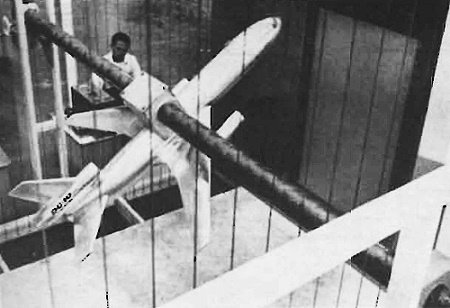
A six-foot-long model of the new McDonnell -Douglas DC -10 commercial jet transport is mounted inside a wire enclosure for tests of its communications and navigation systems. Wires that form the cage are charged to generate a controlled electromagnetic field around the model. Technicians then run experiments with the plane tilted in various flight attitudes to check performance of different antenna installations. The tri-jet plane, with a fuselage nearly 20 feet in diameter and 179 feet long, will carry up to 330 passengers and will operate over ranges from 300 to 3200 miles. Both American and United Air Lines have ordered and optioned a total of 110 of these new jet craft.
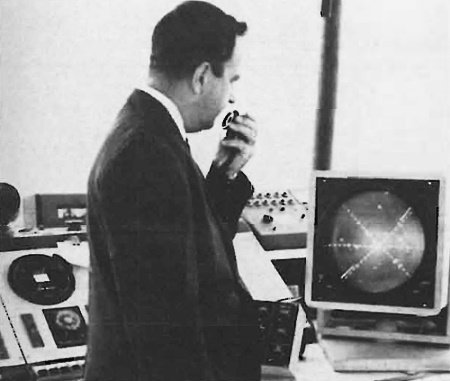
Improved air traffic control, so badly needed at our overcrowded jetports, is the goal of the new bright display radar system shown here. This compact, all-solid-state system is scheduled for installation at New York's John F. Kennedy and LaGuardia Airports, Newark Airport, Dallas-Love Field, and at the Houston International air terminal. While conventional radar scopes require the use of a special hood for viewing or conditions of semi- or complete darkness, this system can be used under high ambient lighting conditions. FAA representatives at Baer Field in Fort Wayne, Ind. feel the system will permit tower controllers to monitor more closely, spot potential traffic conflicts, and greatly expedite air traffic flow. The bright radar display was designed and developed by ITT Industrial Laboratories.
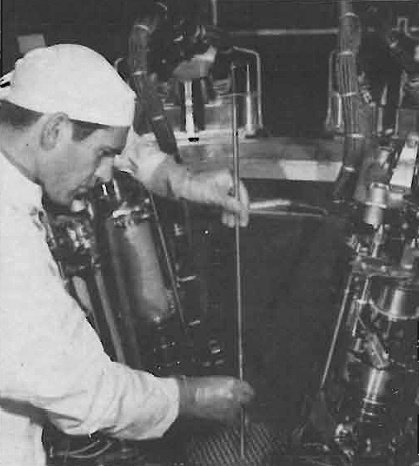
Technician is inserting fuel element into core vessel of SNAP 8DR, compact nuclear reactor system being developed to supply power on the moon or for orbiting spacecraft. With most of its 211 fuel elements now loaded, criticality (sustained nuclear reaction) has row been attained. This system, designed by Atomics International, produces 600 kW of thermal energy. The heat may be converted to electricity by either a mercury, rankine, or thermoelectric converter. The flight- configured reactor weighs 66 lbs.
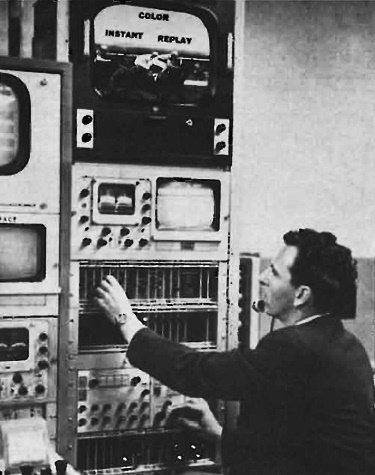
The racing industry's first use of color television to record and play back races for fans and stewards is shown being tested at Monmouth Park (N.J.) race track. The unique RCA color video tape system also provides for instant replay, and makes Monmouth Park the only track in the nation with built-in capability for making color tapes of feature races for rebroadcast over commercial TV.
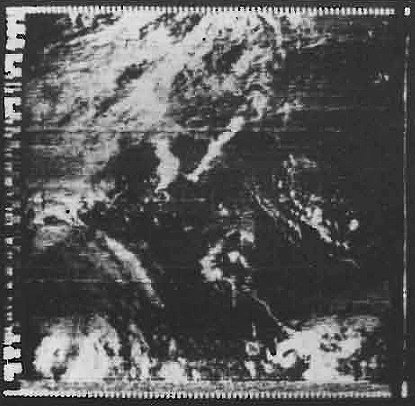
The cloud cover over an area 1200 miles square in southeastern United States is shown in this photograph made by Rex L. Smith, senior technician at Westinghouse Electronic Tube Division. Using secondhand electronic equipment he put together himself, Rex tunes in on the government's Nimbus weather satellites. He records the picture signals on tape, reconstructs them line by line on an electronic storage tube, and takes pictures of the cloud formations the tube displays. A home-built high-frequency antenna leaning against the workshop wall picks up the signals. |
|||||||||||||
 |
|||||||||||||
|
|||||||||||||


|
||||||||||||||||||||||||||||||||||||