|
|||||||||||||
 |
|||||||||||||
The Aircraft-Radio Service Man
|
|||||||||||||
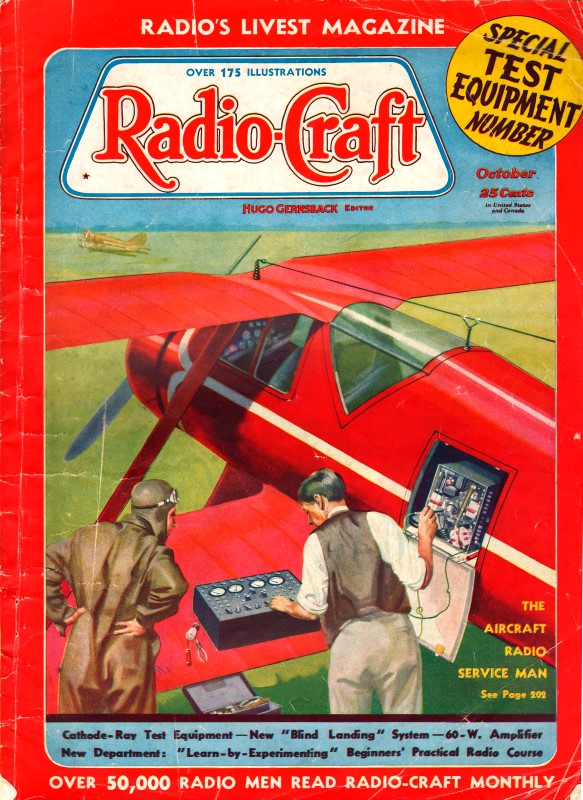
As a life-long aircraft enthusiast, my attention is always drawn to photos, drawings, and titles in articles dealing with any aspect - but particularly a historical aspect - of aviation. This 1937 edition of Radio-Craft magazine reported on the fledgling field of aircraft radio maintenance, and in particular the opportunities presented to radio repairmen. Aircraft electronics (aka avionics) have of course changed significantly over the last 80 years. Accordingly, maintenance has become such a highly specialized skill that other than swapping out entire pieces of equipment, relatively few facilities exist that are qualified for the task. According to the article, at the time there were a mere 5k privately owned airplanes. As of 2019, the AOPA estimated a total of around 220k private aircraft (down from 224k in 2011), with 720k currently licensed pilots (all categories) per the FAA. The Aircraft-Radio Service Man
Most radio Service Men fail to realize the excellent business prospects that lie in "private" aviation - per the author's Table I. Millions of dollars have been spent and are being spent in developing aviation; radio facilities constitute one of the major factors in dependable aircraft operation that has received more than its share of financial backing. As a result, intensive work by "flying laboratories" and land crews connected with the larger transport companies has produced discoveries and equipment of great importance. Radio has greatly increased the dependability of commercial air travel, and the basic new developments of the large aviation companies are gradually being adapted to the needs of the private flyer. At left is reproduced a suggestion, by Radio-Craft, that appears in colors on the cover of this month's issue, which portrays only one activity of the aircraft-radio Service Man. (See Table I - "Sources of Revenue for the Aviation-Radio Service Man" - for a more representative, visualization of the subject.) We wish to point out at this time that, merely because the number of aviation-radio receivers in use is small compared with the number of home-radio sets, it should not be pre-supposed an excellent living cannot be made servicing aviation-radio equipment. In the first place it is almost a matter of life and death to maintain the radio equipment in perfect operation; regardless of the cost, within reasonable limits, this apparatus must be kept in perfect shape, and therefore since the servicing demands are relatively limited it becomes evident that this type of radio servicing commands considerably better prices. Equipment Requiring Service
(1) Servicing existing radio receiving and transmitting equipment, including the power supplies and antenna systems. (2) Modernizing existing radio equipment to include additional services, such as pilot-to-copilot (or passenger) communication system, directional-loop antenna, extended frequency range, etc. (3) Locating and minimizing or eliminating ignition interference. (4) Sale of replacement components. (5) Sale of new transmitting and receiving equipment. (6) Custom construction of radio transmitting and receiving equipment. Table I - Sources of Revenue for the Aviation-Radio Service Man Space does not permit the lengthy discussion that would be necessary to completely analyze the faults and remedial measures connected with private-aviation radio servicing - books have been written on this subject alone - suffice it to say that antenna and counterpoise systems, battery - and generator-operated radio transmitters and receivers and their respective types of current-supply systems; and even in the more modern installations, private communication systems between pilot and co-pilot or passenger, all come within the range of equipment that must be kept in top-notch condition, regardless of (reasonable) expense, by competent radio Service Men.
Posted September 19, 2023 |
|||||||||||||
 |
|||||||||||||
|
|||||||||||||



|
||||||||||||||||||||||||||||||||||||