|
|||||||||||||
 |
|||||||||||||
Lightning
|
|||||||||||||
This 1961 Popular Science magazine article demonstrates that lightning protection fundamentals remain unchanged: ungrounded antennas attract strikes rather than prevent them. Modern understanding confirms that lightning seeks the path of least resistance to ground, and protection still relies on providing that path through low-impedance conductors. While 1961 specifications called for #8 copper cables and deep ground rods, today's National Fire Protection Association (NFPA 780) standards maintain similar principles with updated materials and installation practices. Modern systems still use air terminals, down conductors, and grounding networks, though we now incorporate enhanced bonding techniques and surge protection devices for electronics. The physics of "hot" versus "cold" lightning and streamer formation described in 1961 align with current models, confirming that proper grounding remains the absolute requirement for diverting lightning's destructive energy safely into the earth.
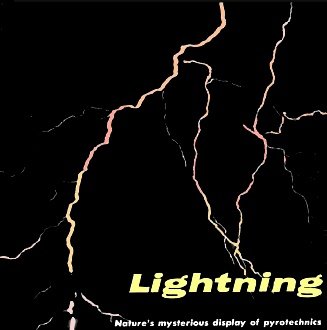
Lightning - Nature's mysterious display of pyrotechnics
After putting the finishing touches on a guy wire, Bill Robbins climbed down from the roof. Once back on the ground, he looked proudly at the several, antennas rising up from the roof of his new suburban home. With all that stuff up there, Bill thought, this is one house that doesn't have to worry about lightning! But a week later the granddaddy of all thunderstorms struck. One colossal bolt made a direct hit on Bill's house, starting a roaring fire it the wood-frame structure, and at the same time knocking out the phone. A grimy Bill watched dazedly as his home went up in flames. And he dumbfoundedly asked, "How could it happen? Those antennas... If anything, those antennas had probably guaranteed that the house would take a damaging lightning strike. Their presence on a building that was already the tallest thing for miles around provided a natural pathway for lightning. And the fact that the antennas weren't tied in with a good lightning protection system meant that the lightning, once it struck, had nowhere to go but into the radio and TV gear and into the non-conducting structure of the house. Actually, had the antennas been connected to a protection system - or at least been properly grounded - they could have made a very effective contribution to the safety of the house. What Is Lightning?
Air terminals, commonly called "lightning rods," are an important part of a protection system. Properly installed, they are the highest points on protected structures, wired to dump thousands of amperes of static electricity harmlessly into the ground. Just how lightning is generated we can't say for sure. But we know that it's the world's most colossal spark, created by the discharge of stupendous amounts of static electricity. It can carry a punch of hundreds of millions of volts, a current of 1000 to 100,000 amperes or more. We also know that there are two basic types of lightning. The so-called "cold" variety has extremely high voltages, combined with relatively low amperages. It hits and disappears within 1/10,000th of a second. It doesn't often start fires, but the enormous pressure of its passage can literally explode whatever it hits. "Hot" lightning, on the other hand, has extremely high amperage but relatively low voltage. With a core path temperature as high as several thousand degrees, this is the type that almost invariably starts fires. Like all electric sparks, lightning results when the potential between negative and positive charges becomes great enough to cause arcing. In some cases, the arcing goes through a barrier of air between the negative charge in a storm cloud and the positive charge of earth. While we don't know the exact mechanics by which this potential is built up, we do know the rough sequence of events. A thunderstorm is generated when a layer of cool air overruns a mass of low-lying, moist, warm air. The warm air tends to rise through the cool air, causing its moisture to condense into water droplets. This movement of air current against air current - and possibly of droplet against droplet - generates staggeringly large quantities of static electricity. For some reason, negative charges tend to collect in the lower layers of a storm cloud and positive charges in the upper layers. One theory is that raindrops falling through the cloud pick up negative ions and deposit them as they pass through the lower layers. In any event, the massive negative potential of the lower cloud layers induces a matching positive potential in the earth below. As our highly-charged thundercloud scuds across the skies, the corresponding positive charge on the earth follows along below, chasing after the airborne source of negative potential. The attraction between the opposing charge causes corona-like negative streamers, or stroke leaders, to descend from the cloud. As they approach the ground, these negative streamers become the focal point for the earth's positive charge.
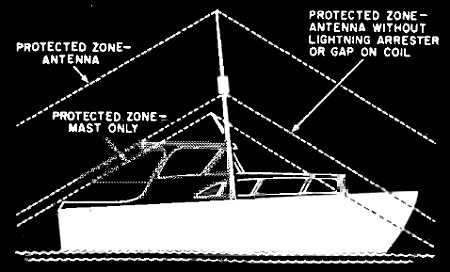
Lightning Protection Afloat If you're a boating enthusiast, you'll be concerned with lightning protection afloat. The marine radio antenna of a small boat, if it's a metal rod type, can generally be depended on to do a bang-up protection job - provided that it's linked to a metal hull or connected to a ground plate in a wooden hull by No. 8 copper cable. If a wooden hull has no ground plate in contact with water, the cable can be run over the side of the boat, into the water. A word of caution: the above does not apply to a non-conducting antenna mast with a spirally-wrapped conductor. But any mast can give protection if you put an air terminal on top and link it with No. 8 copper wire conductor down to ground. Any elevation or structure that will tend to shorten the gap between stroke leader and ground is climbed by this positive charge. Reaching the top, it sends positive streamers up from the elevation. The take-off point for these positive streamers can be anything - an antenna, a flagpole, a silo, a house, or - if he is out all by himself in open country - a man. When negative and positive streamers meet, a tremendous current flow occurs at the meeting place, and a huge return stroke races back up the path created by the descending streamer. At the same time, an immense quantity of raw electrical power is released into the earth. Whether damage will result depends on what physical objects this power must pass through to reach the earth proper. Obviously, lightning going through such non-conductors as wood or brick meets with tremendous electrical resistance. But the massive electrical energy contained in the lightning will not be denied; it smashes through this resistance. In the process it generates enough heat to set fire to - or perhaps even melt - the structure it hits. Protection System If the lightning hits a good electrical conductor, however, it takes this path of least resistance, and its energy is carried harmlessly into the ground. In essence, a lightning protection system is nothing more than a good conductor, designed to provide the most likely target for lightning and offer a safe pathway to ground for the lightning when it does strike. Since objects which shorten the gap between the descending negative stroke leaders and the earth's positive potential are the most likely lightning targets, they form the ideal basis for a protection system. In fact, the obvious thing to do is to make part of that system the highest point on the house. This highest point is familiarly known as the lightning rod. The modern version of Benjamin Franklin's invention is a far cry from the large, often ornate creations of earlier days. It even goes by a different name - the air terminal. Today's air terminal is pencil-thin and pointed, deliberately designed to be as unobtrusive as possible. An air terminal by itself is a pretty useless item. In fact, as the initial point on an electrical conduction system, it is a hazard, an open invitation for lightning to pay a visit. The vital part of the system is a network of cables terminating in a ground rod, buried deep in moist earth. How About You? Is it really necessary to have a full protection system? That depends primarily on where you live. If your neighborhood is heavily built up and there are a lot of tall objects in your immediate vicinity, danger is greatly reduced. But if you're out in the relatively wide-open suburban or rural spaces - in an area that gets a lot of storms - then it's a good idea to make the investment.
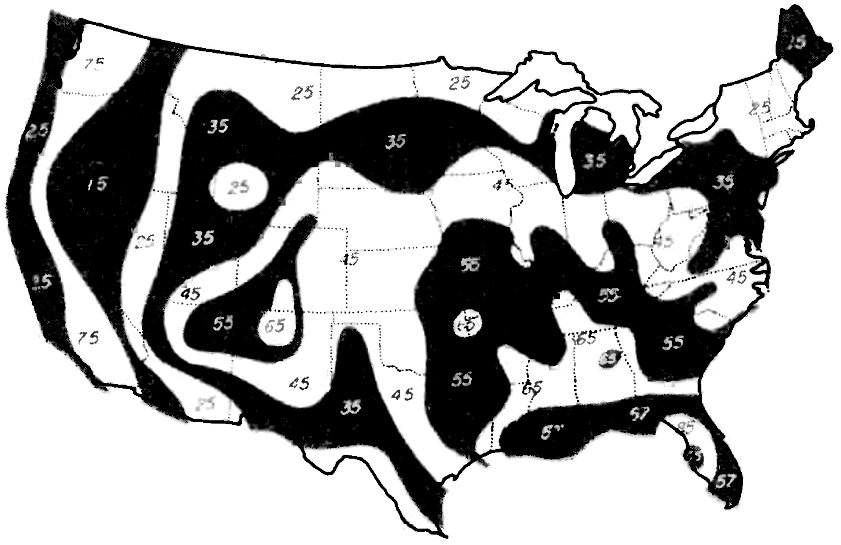
Number of thunderstorms per year varies with locale. Gulf coast of Florida tops rest of nation with 85-95.
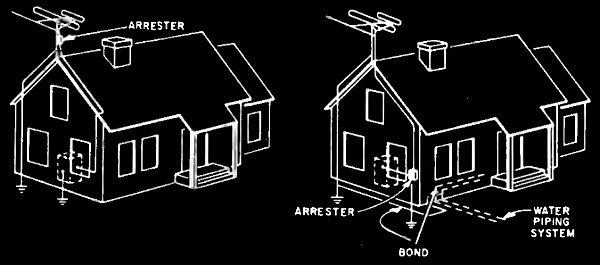
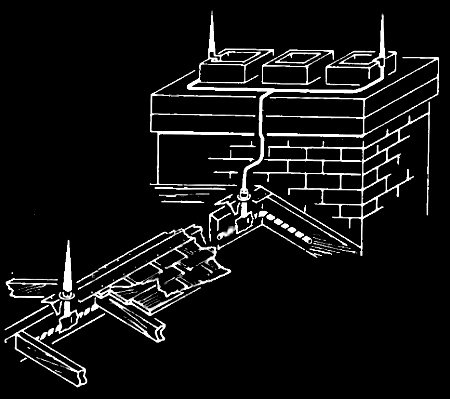
Any antenna can serve as an air terminal in a protection system. The antenna mast should be grounded directly if a high-impedance lead-in is used; lightning arrester should be mounted at same level as radio equipment as shown in drawing above. Additional air terminals should be installed as shown below if antenna is not centrally located.
As a rule of thumb, for every thunderstorm that occurs within a square mile of your home, you can figure on one or two lightning strokes hitting within said square mile. If this adds up to, say, 50 storms a year, you have to reconcile yourself to accepting 50 to 100 strokes annually within half a mile of your house. Though lightning invariably strikes the tallest object handy, it is a temperamental phenomenon and has been known to hit a small house sitting smack between two tall buildings. This is so much the exception, though, that there isn't much point in worrying about it. Actually, if you're near a tall, grounded metal structure, you will benefit from the umbrella of protection it provides. A 100-foot grounded steel tower, for example, should give complete protection to everything within a 50- to 100-foot radius. If your house is no farther away than twice the height of a grounded, conducting structure, you should be fairly secure. A good, properly-engineered protection system costs between $300 and $400 to install, and there are good reasons for this seemingly high price tag. Let's examine a properly set-up system in detail. Air to Ground The air terminals at the top are usually made of copper for maximum conductivity, and it generally takes several of them to do the job. They are installed at intervals along every single high point of the house, such as gables, roof peaks, and chimneys. In fact, a chimney whose diagonal measures more than four feet requires two air terminals. On ridges, air terminals should be spaced no more than 20 feet apart. The conductor cables are usually heavy affairs of copper - they weigh 187 1/2 pounds per 1000 feet, are made up of 17-gauge strands, and interconnect the air terminals. Each air terminal must also have at least two down conductors, so that it will have no difficulty dissipating a heavy lightning charge; generally, the more down-running conductor cables, the better, since a multiple group of parallel paths greatly reduces electrical resistance. All conductor cables must be free of sharp bends that can encourage dangerous arcing; bends can have no less than an 8" radius and any turn must not exceed 90°. Down conductors end in ground rods sunk deep into moist earth. These ground rods must be either solid copper or copper clad, at least a half inch in diameter, and 10 feet long. A minimum of two ground rods are necessary, and they should be at opposite ends of the house. In addition, every metallic object in and on the house - radio -TV antenna masts, metal sidings, or eaves, plumbing and heating pipes, ventilating systems - must be bonded together in the protection system and grounded. This prevents side flashes, and it also guards against charges being induced in these objects by a lightning strike, or even a direct entry by lightning. Price Factors Except for the ground rod, aluminum can be used in lightning protection systems in place of copper. Aluminum is cheaper, but because it is less conductive, parts made of this metal must necessarily be heavier and larger than similar copper parts - making it harder to conceal the elements of an aluminum system. In any event, clamps, connectors, and fasteners must be of the same material as the conductor cables. If you like, you can buy a kit and make your own installation. A copper kit for a roof ridge running 60 to 80 feet costs between $100 and $200. An aluminum kit, generally used only for metal roofs, is available for less than $100. You'll want to consider the insurance angle. A lightning protection system with a Master Label from Underwriters' Laboratories can earn you a lower fire insurance rate. The only way to get such a Master Label is to have the system installed by a UL approved contractor. In the long run, this may prove the more economical approach, particularly when you realize that the standard guarantee runs 50 years and covers free replacement of defective parts. Antenna Protection Although you may not feel a full investment in a complete lightning protection system is justified in your particular case, you might find it worthwhile to protect your antennas. As a matter of fact, if your antenna mast is spotted in the center of your roof and there are less than 20 feet of roofing running out on either side, an antenna can be rigged so that the entire house is adequately protected. The rules are pretty much the same as with a regular protection system. A good copper cable should be connected to the mast with an appropriate cable clamp. The cable is then run along the roof ridge in either direction. If you have more than one antenna mast, of course, they should be tied into the roof-spanning conductor. The down-conductor and ground-rod setup is just the same as with a full-scale, standard protection system. Antennas call for additional protection - a lightning arrester which serves to prevent lightning from entering the house via the antenna lead-in. Special lightning arresters are also designed to protect power and telephone lead-in lines. Actually, the term "arrester" is a misnomer, since the real function of this device is to shunt lightning, or lightning-induced current, to ground. It makes physical contact with the wires in your lead-in cable and is in turn connected directly to a ground rod. An arrester can be attached to an antenna mast proper, but for real protection one should be installed at the point where the lead-in begins. It should be at least as close to ground as is the equipment connected to the lead-in wire. If your lead-in wire is a shielded cable, merely grounding the shield will serve the same purpose as a lightning arrester. In fact, some authorities recommend running shielded lead-in cable right into the ground before running it into the house. Just what kind of protection system will best suit your needs is ultimately your decision to make. But of this much you can be certain. With a system that is properly installed and carefully engineered, the charge you get out of the next thunderstorm will go safely to ground. And ground is precisely where it wanted to go in the first place. Lightning Protection Articles on RF Cafe
|
|||||||||||||
 |
|||||||||||||
|
|||||||||||||

 By Art Zuckerman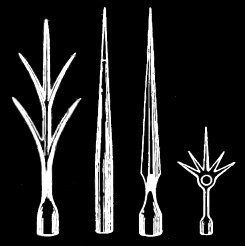

|
||||||||||||||||||||||||||||||||||||