
Press Release Archives:
2026 | 2025 |
2024 |
2023 |
2022
2021 |
2020 |
2019 |2018 | 2017 | 2016 |
2015
Content is copyright of company represented. Page format, custom text and
images are RF Cafe copyright - do not distribute. Note: Posting of press releases costs $100 each for non-advertisers.

 Sam Benzacar, of Anatech Electronics, an RF and microwave filter company, has
published his June 2024 newsletter that, along with timely news items, features
his short op-ed titled "The Vital Role of Microwave Technology in Quantum Systems."
In it, he discusses the use of microwave components in quantum computers. I have
noticed in the photos of the
quantum computers, suspended by fine cables giving them a golden chandelier
look, that there seems to be lots of small diameter coaxial cable and connectors
plugging into what appears to be standard microwave-like packages. Turns out,
according to Sam, that those are coaxial cables and components like mixers,
amplifiers, directional couplers, circulators and isolators, and of prime
interest to him, filters. I still have not informed myself as fully on quantum
computers as I should have by now. It all still seems like black magic, as does
aka quantum teleportation and entanglement (or "spooky action at a distance" as
Albert Einstein referred to it). Sam Benzacar, of Anatech Electronics, an RF and microwave filter company, has
published his June 2024 newsletter that, along with timely news items, features
his short op-ed titled "The Vital Role of Microwave Technology in Quantum Systems."
In it, he discusses the use of microwave components in quantum computers. I have
noticed in the photos of the
quantum computers, suspended by fine cables giving them a golden chandelier
look, that there seems to be lots of small diameter coaxial cable and connectors
plugging into what appears to be standard microwave-like packages. Turns out,
according to Sam, that those are coaxial cables and components like mixers,
amplifiers, directional couplers, circulators and isolators, and of prime
interest to him, filters. I still have not informed myself as fully on quantum
computers as I should have by now. It all still seems like black magic, as does
aka quantum teleportation and entanglement (or "spooky action at a distance" as
Albert Einstein referred to it).
A Word from Sam Benzacar - The Vital Role of Microwave Technology in Quantum
Systems Security Risk
 By Sam Benzacar By Sam Benzacar
We've all heard about quantum systems, which are hard to miss, as stories about
"quantum" appear daily in the media. But one thing we've found odd is that any mention
of microwave technology in these systems is entirely absent, even though without
it, many types of quantum systems couldn't work. In fact, microwave devices and
quantum systems range from mixers, power amplifiers, attenuators and isolators,
directional couplers, several types of antennas, cavities and resonators, waveguides,
coaxial cables, and connectors, and finally - filters.
As a manufacturer of RF and microwave filters, we decided to investigate why
these devices are used in quantum systems. In superconducting quantum circuits that
typically operate at frequencies up to a few gigahertz, microwave filters control
and manipulate the electromagnetic environment around the qubits, reducing noise
and unwanted interactions. In quantum communications, filters remove unwanted interference,
ensuring that only the desired signal reaches the quantum detectors or receivers.
In trapped-ion quantum computers, where RF and microwave signals control and manipulate
the internal states of trapped ions (that function as qubits), filters make sure
control signals have the correct frequency and are not affected by noise, which
would render them inoperable.
 Another application is quantum sensing, which
includes quantum magnetometers or quantum radar. RF and microwave filters enhance
the signal-to-noise ratio and improve the devices' sensitivity. In addition, quantum
hybrid systems that combine several types of quantum devices, such as superconducting
circuits and spin qubits, use microwave filters to create a compatible interface
between the different components. Another application is quantum sensing, which
includes quantum magnetometers or quantum radar. RF and microwave filters enhance
the signal-to-noise ratio and improve the devices' sensitivity. In addition, quantum
hybrid systems that combine several types of quantum devices, such as superconducting
circuits and spin qubits, use microwave filters to create a compatible interface
between the different components.
In short, filters isolate these systems from environmental noise, ensure that
control signals have the desired frequencies, and enable efficient coupling between
different components of the quantum setup. The use of RF and microwave filters is
not just crucial, it's the key to maintaining the coherence and fidelity of quantum
operations in these systems.
Quantum systems are hostile operating environments because most of them must
function at extraordinarily low temperatures, which means that microwave components
used in these areas must be able to withstand them. However, not every type of quantum
system is identical, nor is the temperature within them the same from top to bottom.
For example, in trapped-ion quantum computers the ions themselves don't require
low-temperature operation. Nitrogen-vacancy (NV) centers in diamond can operate
at room temperature, making them attractive for certain applications, such as quantum
sensing.
So, in short, microwave technology is not only used in quantum systems but also
an essential technology that allows them to work. With any luck, the media may someday
become up to speed and recognize its contribution.
 Next: Flying 5G Base Station
in Japan Next: Flying 5G Base Station
in Japan
Aerial telecommunications base stations, developed by Airbus subsidiary AALTO
and a consortium led by NTT Docomo, are expected to be operational above Japan in
about two years. The consortium, which includes Space Compass, Mizuho Bank, and
the Development Bank of Japan, will invest $100 million in AALTO. The Zephyr High
Altitude Platform Station (HAPS) manufactures solar-powered, fixed-wing drones designed
for operation in the stratosphere. The technology behind Zephyr has been under development
for over two decades, evolving from a flight endurance of approximately six hours
at an altitude of 9,000 meters to maintaining operations at 20,000 meters for up
to 90 days.
 Starlink Plans Direct-to
Smartphone Access in the Fall Starlink Plans Direct-to
Smartphone Access in the Fall
SpaceX is set to launch its Starlink system for phones this fall, contingent
on receiving approval from the FCC. The system aims to transmit internet data directly
to unmodified smartphones on the ground, providing a valuable service to consumers
in areas without cellular coverage. Initially, SpaceX plans to offer text, voice,
and web browsing through this supplemental coverage network, with the potential
for future advancements to enable more comprehensive coverage and additional features.
SpaceX has requested that the FCC relax the limit on frequencies for cellular satellites,
arguing that the current restrictive limit would force satellite operators to either
diminish network coverage and capacity or significantly weaken their signals to
comply with the regulations.
 J.D. Power: 5G FWA Fixed
Wireless Has Best Customer Satisfaction J.D. Power: 5G FWA Fixed
Wireless Has Best Customer Satisfaction
According to a recent study by J.D. Power, 5G-based fixed wireless access (FWA)
boasts the highest customer satisfaction among five internet technologies. It surpassed
fiber, cable broadband, DSL, and 4G LTE-based fixed wireless in the rankings. Satisfaction
scores for 5G FWA varied between 775 and 825 on a 1,000-point scale, depending on
the service provider. The primary factor contributing to the high satisfaction with
5G FWA was its cost-effectiveness. Other technologies that received relatively high
satisfaction scores included fiber broadband, with scores ranging from 750 to 760,
and 4G LTE-based fixed wireless, with scores between 725 and 775. DSL ranked lowest
with scores just above 700.
 Air Force to Reduce EW
Update Time Air Force to Reduce EW
Update Time
The Air Force says it can swiftly update its electronic warfare systems with
new battlefield data within hours, according to Col. Josh Koslov, commander of the
350th Spectrum Warfare Wing. Koslov says that more than half of the 70 EW systems
his team manages across the Air Force can now be updated in under 3 hours. "Data
is the weapon that will allow this to happen, and data processing is the way to
do that," Koslov noted. To achieve this, data will have to be integrated from various
sources, such as Army units on the ground, naval ships in the Pacific, and airborne
platforms, with the data then analyzed to identify new threats.
Anatech Electronics Introduces a New Line of Suspended Stripline and
Waveguide Type RF Filters
Check out Our Filter Products
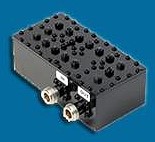
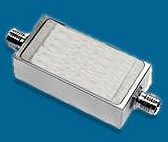
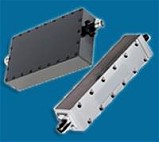
Cavity Band Pass Filters
LC Band Pass Filters Cavity Bandstop/Notch Filter
About Anatech Electronics
Anatech Electronics, Inc. (AEI) specializes in the design and manufacture of
standard and custom RF and microwave filters and other passive components and subsystems
employed in commercial, industrial, and aerospace and applications. Products are
available from an operating frequency range of 10 kHz to 30 GHz and include cavity,
ceramic, crystal, LC, and surface acoustic wave (SAW), as well as power combiners/dividers,
duplexers and diplexers, directional couplers, terminations, attenuators, circulators,
EMI filters, and lightning arrestors. The company's custom products and capabilities
are available at www.anatechelectronics.com.
Contact:
Anatech Electronics, Inc.
70 Outwater Lane
Garfield, NJ 07026
(973)
772-4242
sales@anatechelectronics.com
Posted June 25, 2024
|